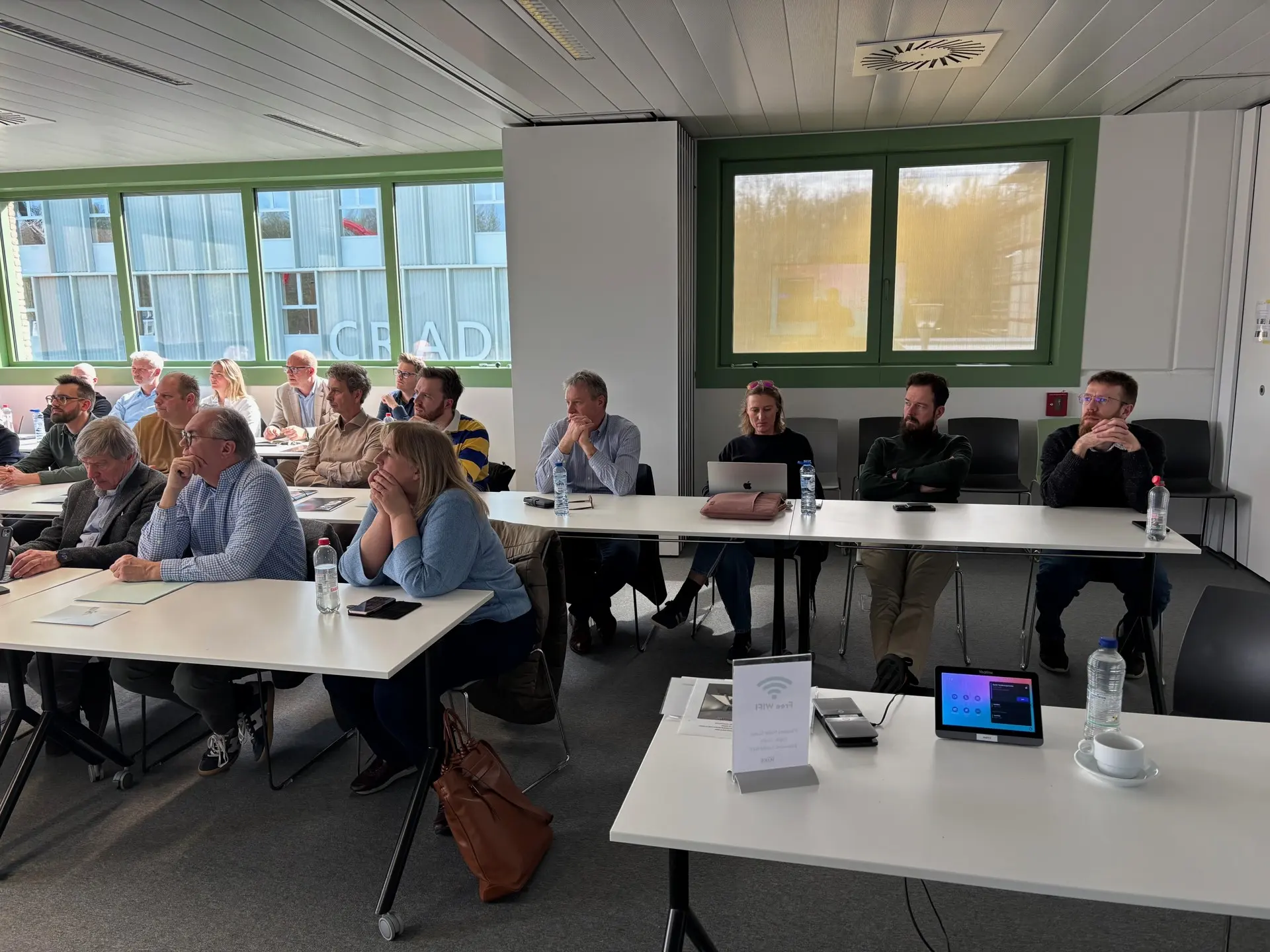
On Tuesday 17 March 2026 the first steering group of the PRINTELLIGENCE project took place at Sirris in Leuven. The aim of this kick-off: introduce the participating companies to the project, the partners and the scope, and collect the concrete needs and ideas of the printing industry through a brainstorm.
The programme in brief
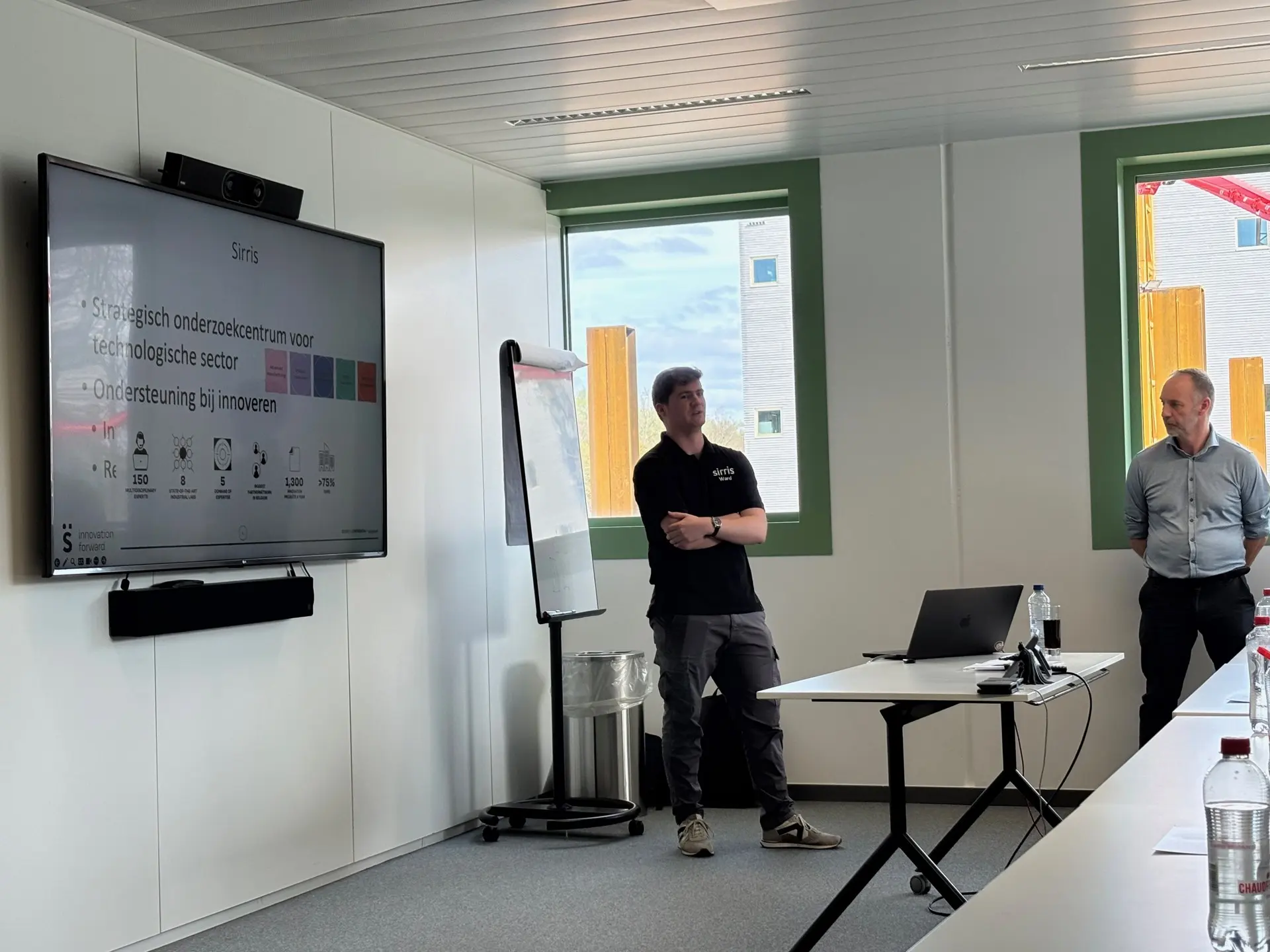
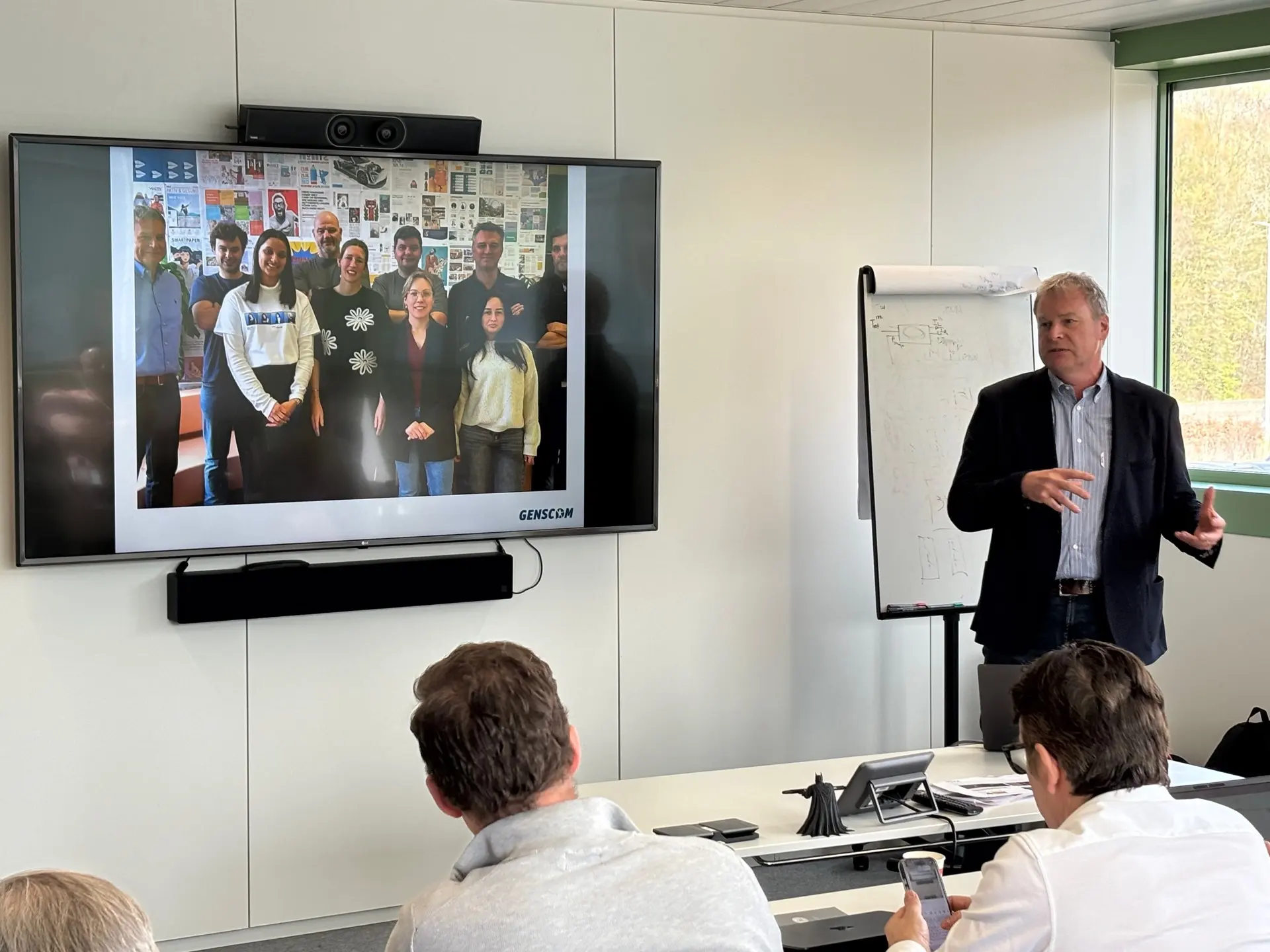
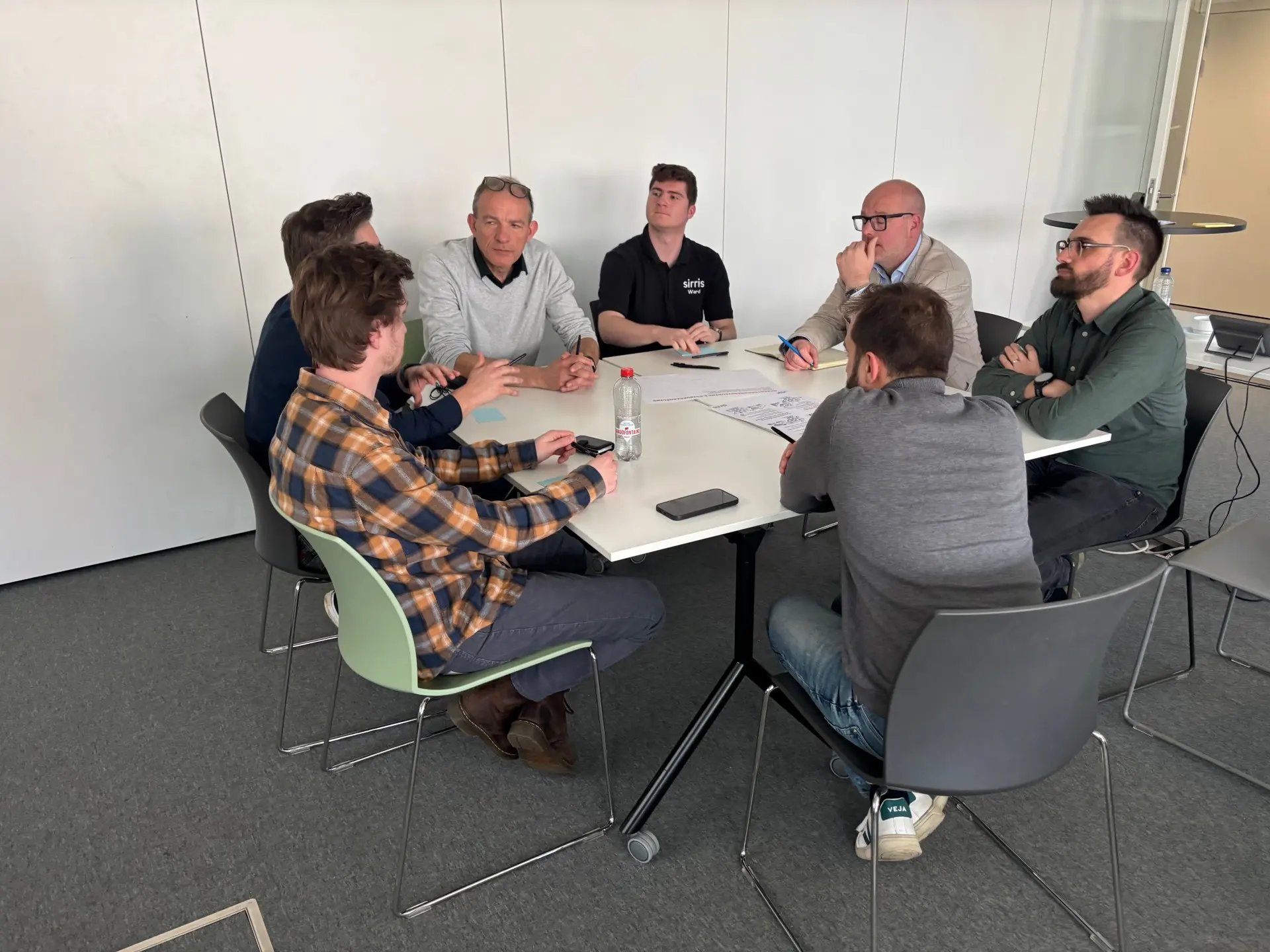
After a welcome with sandwiches, VIGC and Sirris introduced themselves and the project: why AI is becoming more important for the printing industry and how PRINTELLIGENCE supports that with concrete guidance, tools and knowledge sharing. Next came a presentation on AI in production environments, with examples of how machines can be controlled in plain human language, and a practical case from the printing industry. The closing piece was an interactive brainstorm session in four groups.
| 12.30 | Welcome with sandwiches |
| 13.00 | Welcome, introduction of VIGC and of the participants |
| 13.05 | Introduction of Sirris |
| 13.10 | Introduction of the PRINTELLIGENCE project: scope and collective |
| 13.40 | Presentation “AI in production environments” (Sirris) |
| 14.10 | Practical case from the printing industry |
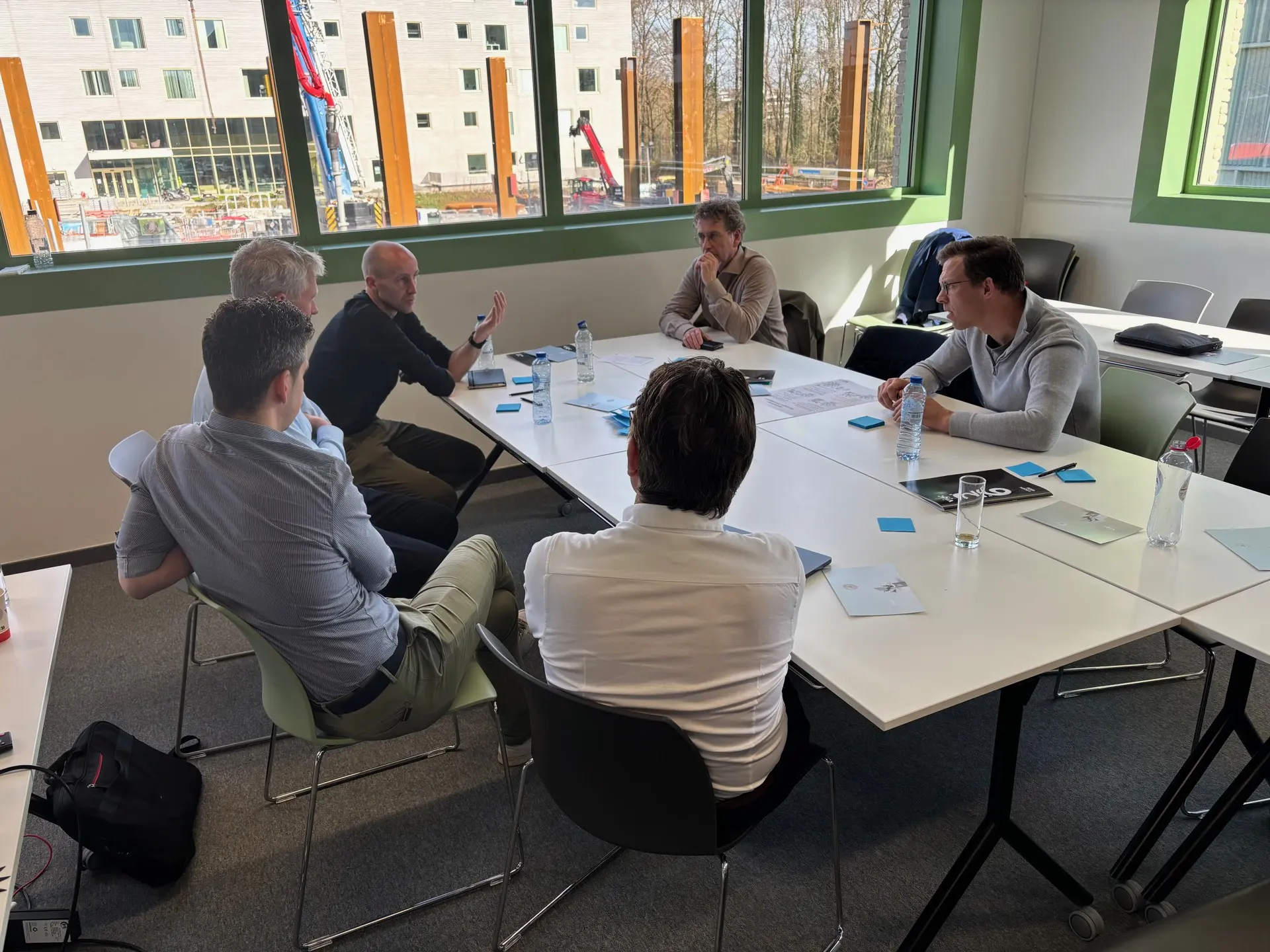
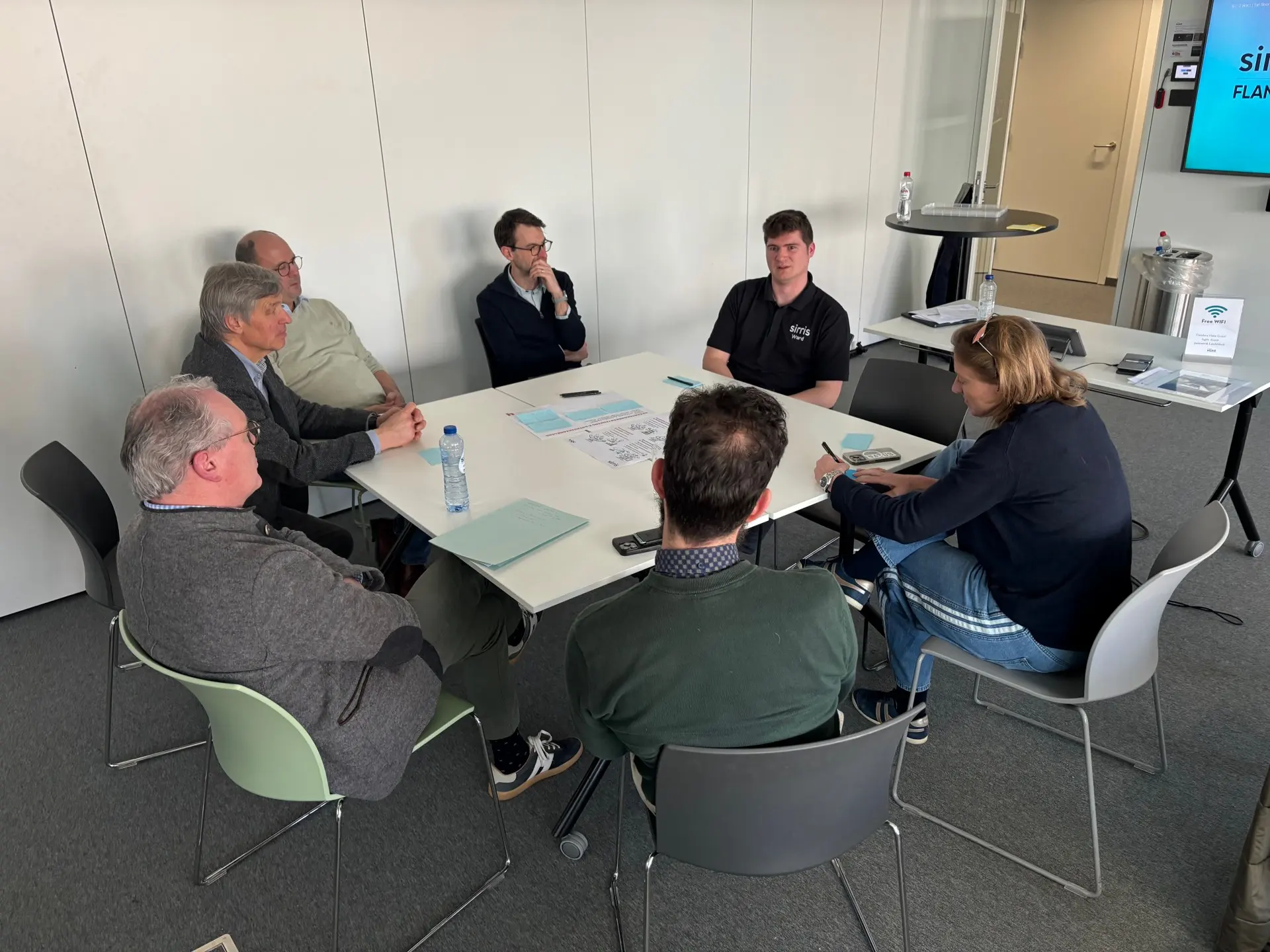
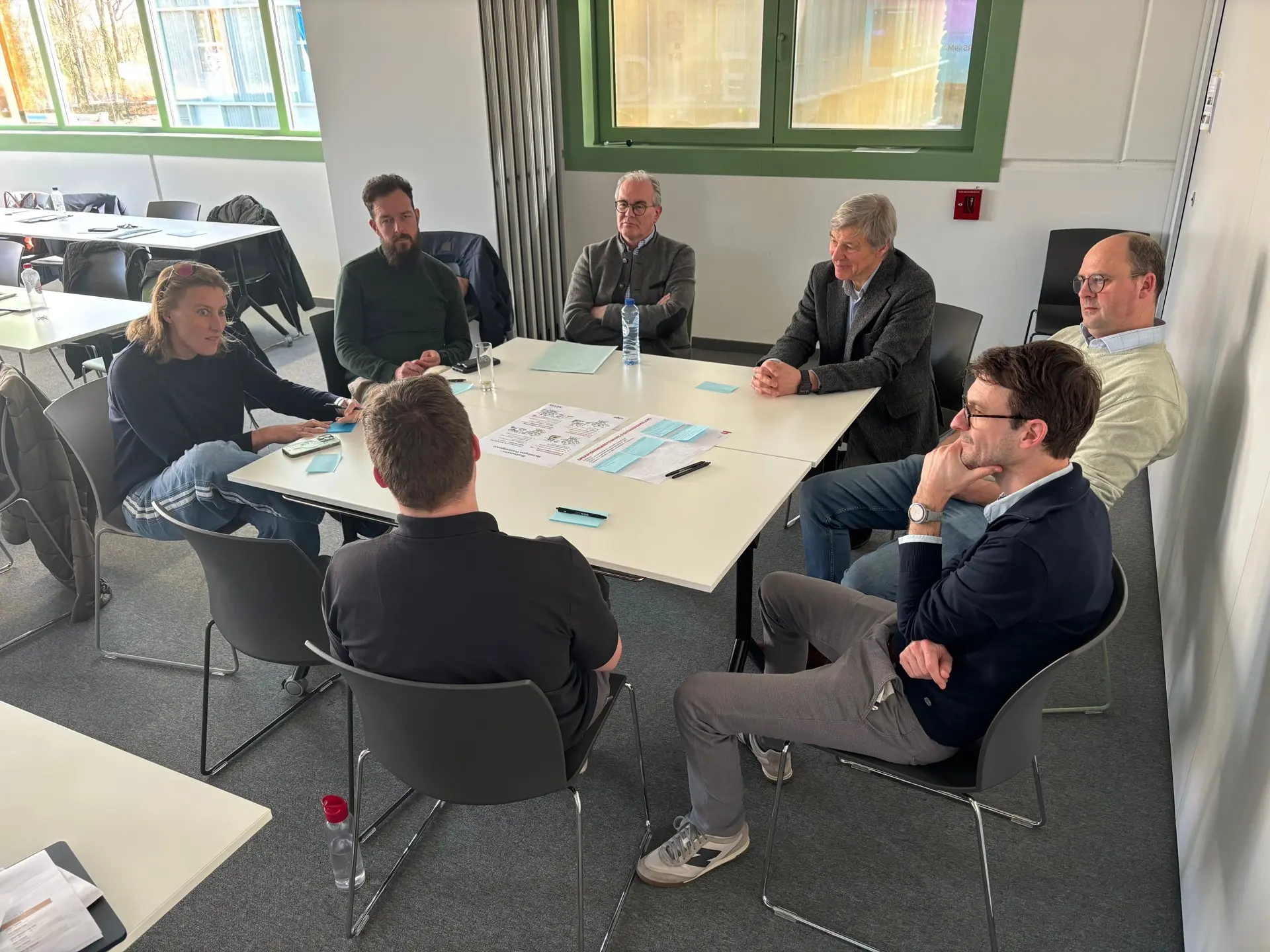
| 14.30 | Brainstorm session in four groups |
| 15.30 | Closing |
75 ideas in four themes
The brainstorm produced a total of 75 concrete ideas and needs, spread over four domains. Per theme the ideas were bundled into research directions that serve as the basis for selecting use cases and the first proof-of-concepts.
Theme 1, 18 ideas
Quality control & planning
AI cameras for real-time quality monitoring, smart capacity and production planning and predictive complaint handling.
Four research directions from the report
- AI camera for quality controlInline cameras with AI that detect deviations in real time and tell good from bad.
- Smart capacity and production planningAI that takes delivery timings, machine capacity, staff and historical data into account.
- Predictive complaint handlingEstimating the chance of complaints before delivery, based on camera images and machine data.
- AI-driven prepress and machine selectionOptimising prepress automatically and letting AI calculate the best machine choice.
Theme 2, 19 ideas
Maintenance & machine data
Predictive maintenance, a chatbot at the machine, machine-independent data collection and knowledge management.
Four research directions from the report
- Predictive maintenanceAI that predicts from machine data when parts are due for replacement, with a digital twin as simulation.
- Chatbot at the machineAn AI chatbot that gives operators real-time information about the machine, current orders, settings and documentation.
- Machine-independent data collectionConnectors that collect data from various machines, regardless of brand or type.
- Knowledge managementCapturing company knowledge centrally and making it searchable with AI. From implicit experience to accessible knowledge.
Theme 3, 25 ideas
Process optimisation & energy
Optimising the print sequence, smart energy management, operator flow analysis and connecting data from order processing systems right down to the press.
Four research directions from the report
- Optimising the print sequenceAI that calculates the best print sequence based on formats, inks, substrates and the planning. Fewer changeovers, fewer wash intervals.
- Smart energy managementAI that matches energy consumption to production, with an eye on peaks and energy prices.
- Optimising operator flowCameras and sensors that analyse the workflow of operators, aiming for shorter walking routes and set-up times.
- Connecting data from order processing systemsBringing together data from systems such as SAP and Multipress so that the full order information is available right down to the press.
Theme 4, 13 ideas
Operator support & data
Digital work instructions and onboarding, capturing the experience of senior staff, smart data collection and a searchable knowledge base.
Four research directions from the report
- Digital work instructions and onboardingWork instructions via video, adapted to the experience and the language of the operator. Capturing the experience of senior staff via speech recognition.
- Smart data collectionAdding sensors to machines and making better use of APIs. Making data from small runs usable with AI.
- Context and knowledge baseUsing the context of previous orders and linking feedback to production and quality. Building a searchable knowledge base.
- Production monitoring with an AI cameraCameras that follow walking routes and occupancy on the shop floor, to align people and machines better.
Five common threads
- 1Data as the foundation. Almost every idea starts with collecting, connecting and making data usable. Without good data there is no working AI.
- 2Camera plus AI as a cross-cutting theme. AI camera monitoring came back in all four groups, from quality control to process monitoring.
- 3The operator at the centre. AI to support people, not to replace them: knowledge retention, digital assistance and a lower threshold to operate machines correctly.
- 4Smart planning as a lever. From capacity to print sequence: this is where AI can have an impact quickly.
- 5Natural language for JDF/XJDF. AI as a translator between plain language and the technical workflow standards of the industry, a promising route to make automation accessible for SME printers.
The presentations and the report
Browse through the slides with the arrows left and right, or swipe sideways. Prefer paper: download the PDF.
PRINTELLIGENCE: the project introduced
AI in production environments
Report: Steering Group 1
What now?
In the coming months the project team focuses on three pillars: collecting and unlocking data together with machine manufacturers and printing companies, setting up the hardware infrastructure and IT security for the proof-of-concepts (including mobile PoC cases that run securely and fully separated from the company IT), and testing the first automations internally.
The second steering group took place on Thursday 24 September 2026 at the Corda Campus in Hasselt. Read the report with the first results.
Go to the report of steering group 2 Back to the calendar Subscribe to the newsletter