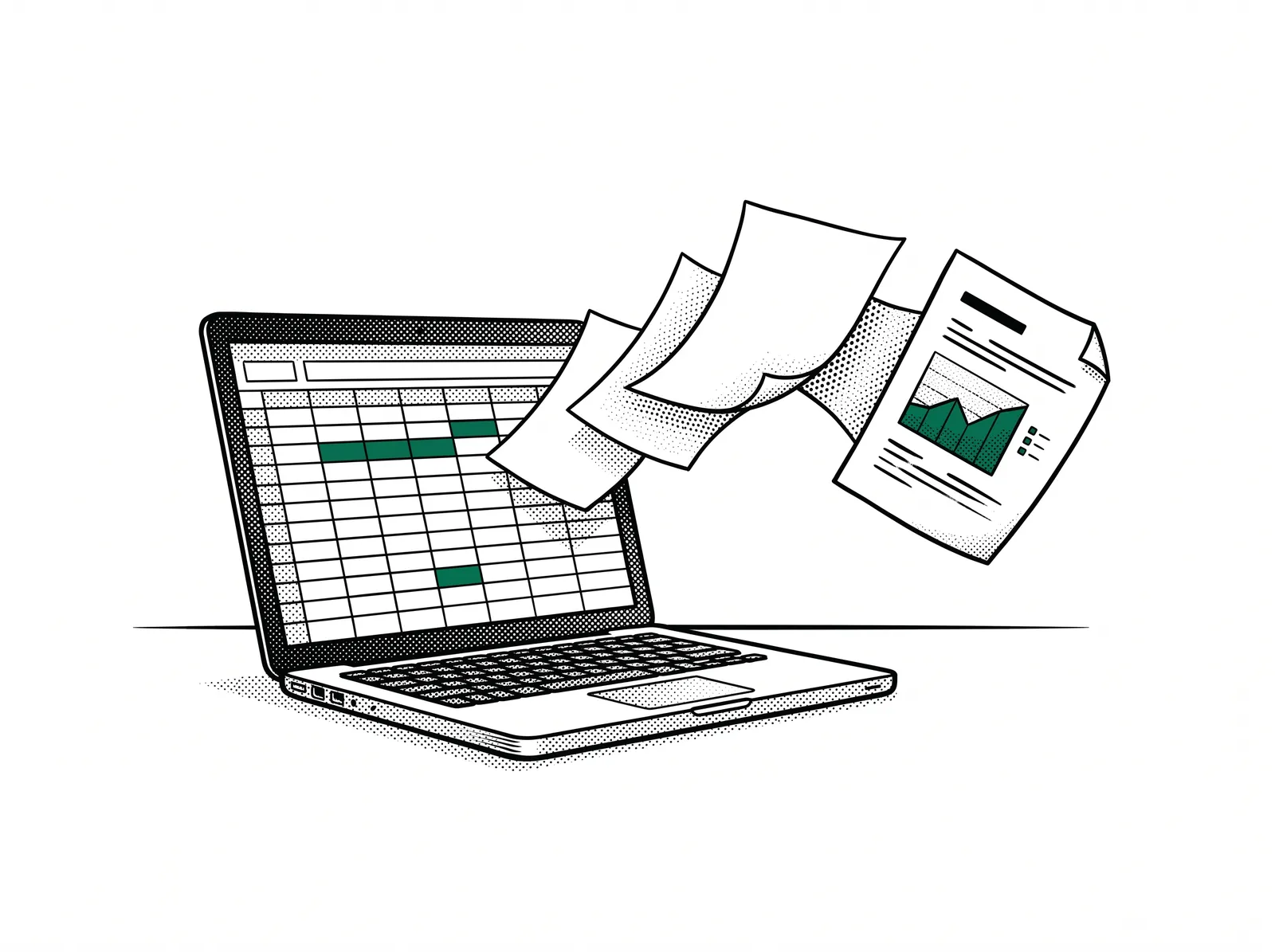
Take a look in the mirror: do you still work in Excel?
There are two kinds of people walking around in our companies. One group is lyrical about tools such as Claude Code and Codex and stays busy with them until late. The other waits to see which way the wind blows and works like ten years ago.
What strikes me is who is in that first camp. Rarely who you would expect.
The owners are the believers
It is the owners of the SMEs themselves who are the most enthusiastic. Not the IT department, not the employees.
Logical, really. They have always paid the invoices. For every change to the website, for every modification to the software, for every piece of custom work that took months. Now that they come into contact with those tools themselves, they see that they can make a lot themselves. A website. A tool that reads and sorts mails. A machine that summarises quotes. And whoever goes a bit further builds heavier things.
And when such an owner then gives ten Claude subscriptions to his team, it is a real party.
The warehouse worker and his hobby
A story I heard myself last Friday. No small player: mountains of data, offices in Limburg and in New York, run by two women.
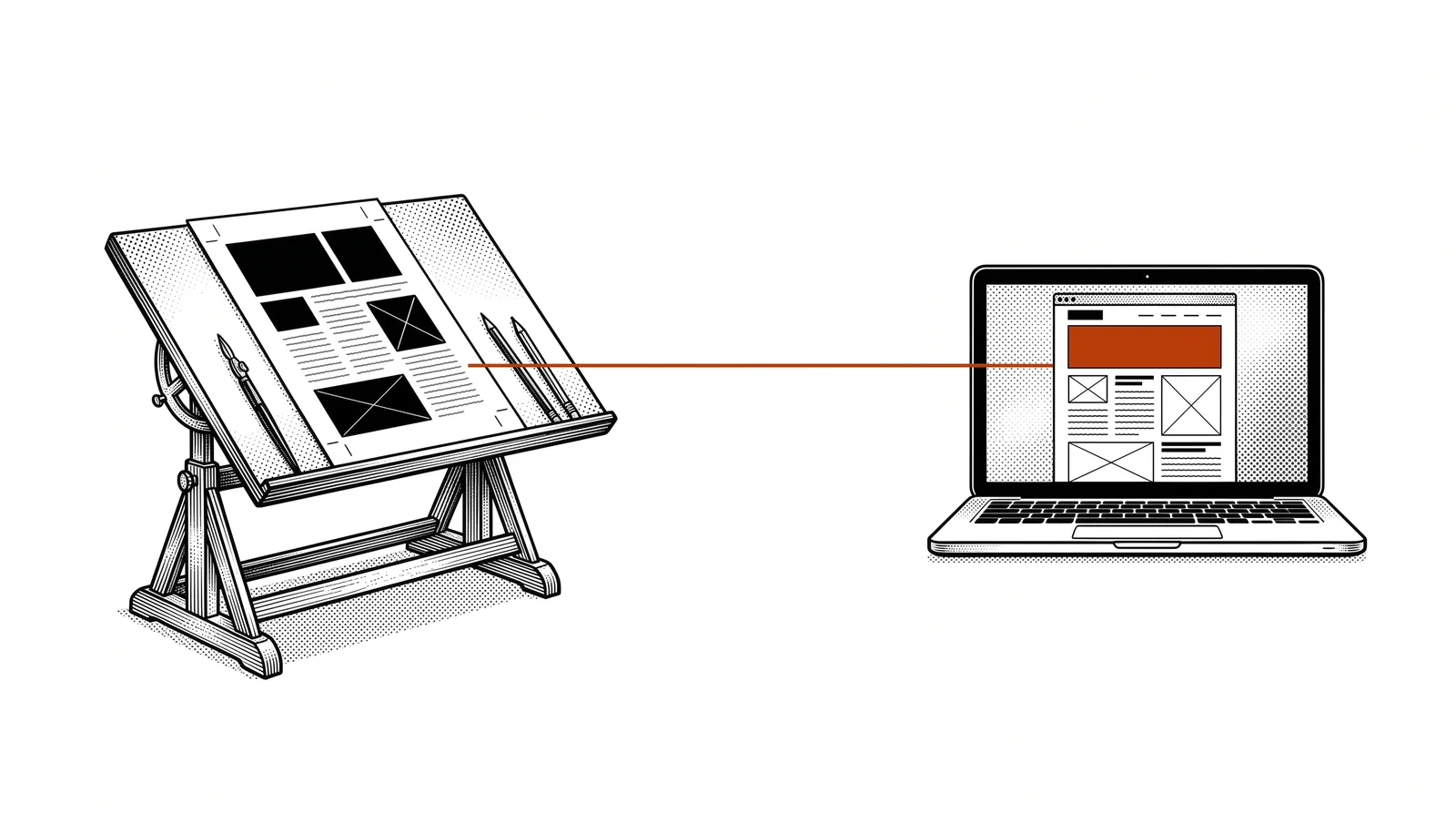
A warehouse worker works there who used to build websites as a hobby. The owners gave him the tools to go all in on that, and he built the complete company website in one go. It was live in four weeks. One of the owners told me she had never seen her employees so happy.
At another company one of the owners suddenly turns up at the office at six in the morning. Not because she has to. She is solving problems she has been wrestling with for more than ten years, and that now takes a week.
These are no cowboys who dump everything into a chatbot. Those owners knew how to handle their data. They knew precisely the difference between "this was made with AI" and "this is AI". That difference matters, because a tool you build yourself with AI runs on your terms, with your data where you want it.
That is what is happening. Problems that go away. That quote flow that used to take a thousand clicks is now three. And there are dozens more like it.
People still remain at the centre of it. What makes the difference is the domain knowledge of that warehouse worker, that estimator, that press operator. The tool finally gives that knowledge wings.
And then the other camp
Opposite them are the companies that are not working on it. Talked into fear, by I do not know whom, of data loss or worse. While the companies that are working on it prove precisely that you can work safely if you know what you are doing.
Many companies still send around Excel files pulled straight from their system. That seems harmless. Before you know it five versions are circulating, the data is outdated and someone is retyping everything by hand. It happens more often than you think.
So take an honest look in the mirror. Are you still registering everything in Excel? Then you are doing it wrong. What takes you two days, your competitor is doing right now in twenty minutes. And he puts that time into things that do matter: customers and quality.
In the meantime, do not throw those Excels away. They hold years of accumulated knowledge. Exceptions, customer agreements, working methods, decisions that are not written down neatly anywhere else. That work is not lost, it is your starting point. Your Excel is really your first mini database, and with AI you convert it step by step into something real.
And what about the suppliers?
AI makes it much more accessible to build digital solutions yourself. And in my view that is exactly what will make companies realise how much is actually possible, and how much digitalisation can bring them.

At first sight that may seem like bad news for web builders, software suppliers and other digital service providers. I actually think the opposite. I predict more work, only part of that work will look different.
An entrepreneur who today puts together a small tool, website or automation with AI often discovers its limits along the way. What starts as "let me just try this myself" can eventually lead to the question: how do we make this better, safer, scalable and integrated with the rest of our company?
And that is exactly where I see a huge opportunity for suppliers. No longer necessarily for every small change, but for the more complex questions: how do we set this up professionally? How do we make sure it is secure? How do we connect it to our existing systems? How do we turn it into something that really works for the company?
AI makes digitalisation more accessible. And precisely because of that I think more companies will discover that investing in digitalisation is worth it.
So the demand for suppliers does not disappear. It shifts. And whoever understands that shift will, in my view, only get more work.
What does this mean for the printing industry?
We are right in the middle of it and we are actively looking at how we can steer this. With Printelligence, aimed at the shop floor of a printing company, and alongside it with tailored solutions for companies that want to go further.
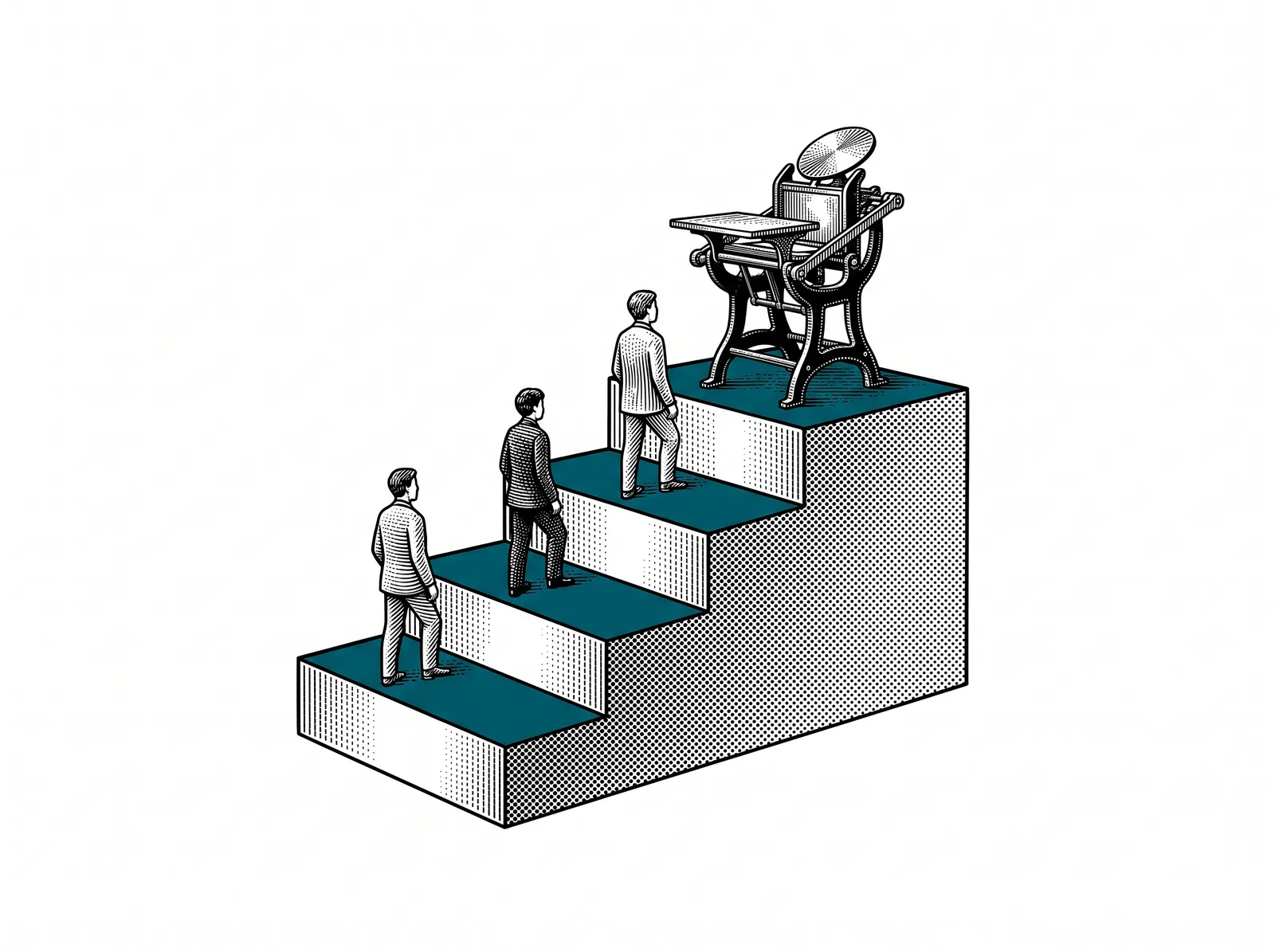
For me and for VIGC too this is a new exercise. As consultants we can now make all kinds of things ourselves in one go. Build an AI computer, set up a Linux server, put together a complete tool. Where our work used to end with advice and a referral, today we can simply deliver a proof of concept ourselves. Do we keep advising, do we build along, or both? Honestly I do not know yet, so I am putting that question openly on the table here.
Through that research I have above all learned an enormous amount about AI in six months. I do not feel I have suddenly become a specialist, but I do feel I have gained a kind of permanent teacher.
Someone I can ask something at any moment. Who can explain endlessly, helps me see connections and often leads me on to the next question. That makes me feel I have learned faster and more broadly in the past six months than ever before.
Sometimes I even get up far too early for it, simply because I want to figure something out and it is too interesting to leave.
And apparently I am not the only one who experiences it that way. Many people describe AI as a personal tutor or learning partner. By now I understand very well why.
I have also solved a few problems with it by now. For the time being mainly my own. ;-)
So: look in the mirror
Which camp are you in? Let me know in the comments or send me a message. And if you want to know where you can concretely start in your printing company: that is what a next newsletter is about.